Image
Image

Kombo Nuts (Cosmetic and Sterile)

$5.05
$19.99
From $0.46/mo or 0% APR with
You are saving
75%
($14.94)
Sale
number of bags:
1

Real Kombo Nuts. Wild Grown. The Origin of Kombo Butter.

This is where kombo butter begins. Each bag of Baraka Kombo Nuts contains a small bag of genuine kombo nuts from the Pycnanthus angolensis tree — known as the African nutmeg — grown in West Africa. These are the actual nuts from which all kombo butter is extracted. Seldom available outside of West Africa in retail form, kombo nuts are one of the rarest raw botanical materials in the world — a genuine and tangible glimpse into the origin of one of the most distinctive and botanically unique butters in the Baraka range. Whether you are a retailer wanting to show customers where kombo butter comes from, an educator teaching about African botanical ingredients, or someone simply curious to hold the source of this rare botanical — this is the starting point of the entire kombo story. Please note: these nuts are sterile and will not grow. They are for educational, display, and cosmetic use only.

Quick Specs:

  • Contents: A small bag of kombo nuts — wild-grown
  • Species: Pycnanthus angolensis (African Nutmeg)
  • Origin: West Africa — tropical shade trees
  • Designation: Cosmetic use only — sterile, will not grow
  • Sizes Available: 1 bag · 2 bags · 3 bags (bundle savings on 2 and 3 bag orders)
  • Best For: Retail education, trade shows, in-store displays, classroom teaching, personal curiosity
  • Related Product: Baraka Kombo Butter — extracted from these nuts

Perfect For:

  • Retailers and skincare brands who want to show customers where kombo butter comes from
  • Trade show and in-store displays — a hands-on conversation starter about one of Africa's rarest botanical skincare ingredients
  • Educators and students learning about West African botanical ingredients, traditional extraction methods, and the biodiversity of tropical African trees
  • Anyone curious to see, hold, and understand the origin of kombo butter — one of the rarest botanical butters available in natural skincare
  • Brand storytelling — connecting customers to the remarkable origin story behind kombo butter products
  • Nuts N' Beans collectors and natural ingredient enthusiasts

Key Takeaways:

  • Genuine wild-grown kombo nuts from West Africa — the actual nuts from which kombo butter is extracted
  • Among the rarest raw botanical materials available anywhere in retail — kombo nuts are almost never found outside West Africa's producing regions
  • A tangible bridge between raw botanical ingredient and finished product — the starting point of every jar of Baraka Kombo Butter
  • Every order supports the communities in West Africa who harvest and process these remarkable nuts

Order now and support the communities of West Africa who harvest these rare botanical nuts

Handmade by Women in Ghana
Trusted by 17,000+ Customers
Pure • Unrefined • Lab Tested

What Are Baraka Kombo Nuts Good For?

The quick answer: Baraka Kombo Nuts are the actual nuts from which kombo butter is extracted — wild-grown from Pycnanthus angolensis trees in West Africa. Sterile and intended for educational, display, and cosmetic use only. They are among the rarest raw botanical materials available in retail form anywhere in the world — a genuine and tangible connection to the origin of one of Africa's most distinctive botanical butters, naturally rich in myristoleic acid and with a fatty acid profile unlike any other ingredient in the Baraka range.

The Story Behind the Nut

Kombo butter comes from the Pycnanthus angolensis tree — known as the African nutmeg — a tall tropical tree native to West and Central Africa. These trees play a remarkable ecological role: they provide natural shade and ecosystem biodiversity for cocoa crops, growing in relationship with the cacao trees that produce the cocoa beans and cocoa butter that are the foundation of the Baraka Nuts N' Beans range. The kombo nut is extracted from the tree's fruit, then processed to yield kombo butter — a distinctive, waxy botanical butter that is naturally high in myristoleic acid, a fatty acid rarely found at significant concentrations in other plant butters. Holding one of these nuts is holding the origin of one of the most botanically distinctive ingredients in the entire Baraka range. Learn more about kombo butter in The Kombo Butter Story.

Who Uses Kombo Nuts — and How

Who You AreHow You Use Them
Skincare RetailersDisplay in-store alongside kombo butter products to show customers the physical origin of one of the most unusual botanical butters available — a powerful point-of-sale storytelling tool for a rarely understood ingredient
Wholesale BrandsUse at trade shows and buyer meetings to demonstrate supply chain transparency and the authentic botanical origin of kombo butter — most buyers will never have seen or held a kombo nut
Educators and TeachersUse as hands-on teaching material for lessons on African botanical ingredients, tropical tree biodiversity, traditional extraction methods, and the ecological relationships between African tree species
Curious ConsumersExperience the actual nut behind kombo butter — one of the most rarely seen raw botanical ingredients in natural skincare, and one of the most botanically distinctive ingredients in the Baraka range
Natural Ingredient EnthusiastsAdd one of the world's rarest botanical skincare ingredient origins to your collection — kombo nuts in retail form are genuinely exceptional outside of West Africa's producing regions
Fair Trade AdvocatesUse as a conversation piece about the communities who harvest these rare nuts — connecting the physical object to the human story behind kombo butter production

What Makes Kombo Nuts Exceptionally Rare

  • One of the rarest botanical butters: Kombo butter is produced from the nuts of the Pycnanthus angolensis tree — a species not commercially cultivated, making every nut wild-harvested from naturally growing trees
  • Naturally high in myristoleic acid: The kombo nut is the botanical source of kombo butter's distinctive myristoleic acid content — a fatty acid present at significant concentrations in very few plant butters
  • Ecological significance: Pycnanthus angolensis trees provide natural shade and biodiversity for cocoa crops across West and Central Africa — these nuts come from trees that play an active role in the same ecosystems that produce Ghana's celebrated cacao
  • Almost never in retail: Kombo nuts are processed immediately after harvest — making them available in retail form for educational and display purposes is exceptionally uncommon

For more on kombo butter and its remarkable botanical properties, see The Kombo Butter Story and the Baraka Kombo Butter product page.

Q: What exactly are these kombo nuts?
A: These are the actual nuts from which kombo butter is extracted — from Pycnanthus angolensis (African nutmeg) trees in West Africa. Sterile (will not grow), designated for educational, display, and cosmetic use only. The botanical source of one of Africa's most distinctive butters, naturally high in myristoleic acid.

How Do You Use Baraka Kombo Nuts?

These are for education and display — not for home butter extraction.

Baraka Kombo Nuts are sterile and designated for cosmetic use, educational display, and storytelling purposes only. They are not intended for home processing into kombo butter — traditional kombo butter extraction requires specific equipment and large quantities of fresh nuts. What these nuts are for is showing, explaining, and connecting — bringing the physical origin of one of Africa's rarest botanical butters into a retail, educational, or personal context where it can be seen, held, and understood.

Three Ways to Use Them

1. Retail Display and Point-of-Sale Storytelling
Place a bag or a few loose nuts in a small bowl or glass jar alongside your kombo butter products in-store. A small card explaining "This is where kombo butter begins — wild-harvested from African nutmeg trees in West Africa" gives customers a tangible connection to one of the most unusual botanical ingredients in natural skincare. For most customers, this will be the first time they have ever seen or held a kombo nut — making it an exceptionally powerful point-of-sale storytelling moment.

2. Trade Show and Brand Event Engagement
Kombo nuts are among the most effective conversation starters at trade shows in the natural skincare space — because almost no one has ever seen one. Most buyers, retail partners, and skincare professionals will never have encountered a kombo nut. Offering them the chance to hold the actual botanical source of kombo butter creates a memorable and distinctive brand moment. Pair with Baraka's kombo butter samples, the African nutmeg botanical story, and the Kombo Butter Story for a complete origin-to-product narrative.

3. Educational Use — Classroom, Workshop, or Home
For educators, students, and curious individuals: kombo nuts are one of the most effective teaching materials for lessons on African botanical diversity, tropical tree species, traditional extraction methods, and the extraordinary range of botanical skincare ingredients produced across West Africa. Explain the Pycnanthus angolensis tree, its role as a shade tree for cocoa crops, and the myristoleic acid that makes kombo butter so distinctive — a complete botanical and ecological story in the palm of your hand.

Display Tips

  • Open display: Remove a few nuts from the bag and place them in a small open dish — allowing customers to touch and examine them is key to their educational value
  • Pairing: Display alongside a jar of Baraka Kombo Butter to complete the nut-to-butter origin story
  • Labelling: A simple card noting "Kombo Nuts — African Nutmeg — West Africa — the origin of kombo butter" maximises storytelling value
  • Rarity note: These are genuinely exceptional in retail — letting customers know they are holding one of the rarest botanical ingredients in natural skincare adds to their perceived value and brand story

For more on the full kombo butter story, see The Kombo Butter Story and the Baraka Kombo Butter product page.

Q: Can I extract kombo butter from these nuts at home?
A: No — these nuts are sterile and designated for educational and display use only. Kombo butter extraction requires specific processing equipment and large quantities of fresh nuts — it is not replicable at home with a small display bag.

How Many Bags of Kombo Nuts Should I Order?

Baraka Kombo Nuts are available in 1, 2, or 3-bag quantities — with bundle savings on 2 and 3-bag orders. A single bag is ideal for personal curiosity or a single in-store display. Two or 3 bags give retailers and educators enough nuts to use across multiple displays, events, or classroom sessions simultaneously — and ensure you never run out of one of the rarest conversation starters in natural skincare.

Quantity Comparison

QuantityBest For
1 BagPersonal curiosity · single retail display · classroom sample · first-time order
2 BagsMultiple displays · trade show use · educator with multiple classrooms · gift pairing
3 BagsRetail chains · regular event use · wholesale buyer kits · full origin storytelling stations

Why Order More Than One Bag?

  • Significant bundle savings: 2 bags saves 37% vs. buying individually; 3 bags saves 50% — the most economical option for regular use
  • Multiple displays: If you have more than one retail location or display station, having extra bags means you never need to rotate a single set of nuts between locations
  • Gift and pairing: A bag of kombo nuts alongside a jar of Baraka Kombo Butter makes a meaningful, genuinely rare gift — order 2 or 3 bags to create multiple nut-to-butter gift sets
  • Educational events: Teachers and workshop facilitators find that having multiple bags allows every participant to hold their own nuts during a session

For other raw botanical display materials from Baraka's sourcing regions, browse the full Nuts N' Beans collection.

Q: What is the difference between 1, 2, and 3 bags?
A: The contents are the same across all quantities. 2 and 3 bag orders offer significant bundle savings (37% and 50% respectively) and provide more nuts for multiple displays, events, or classroom sessions.

Are Kombo Nuts Available in Larger Quantities?

Baraka Kombo Nuts are currently available in 1, 2, and 3-bag quantities through the standard product page. Given how rarely kombo nuts are available in any retail form, the 3-bag order is recommended for regular users — supply can be limited. For trade show quantities, wholesale buyer kit production, or retail chain display needs, contact Baraka directly to discuss volume availability.

Pairing Suggestions

  • With Kombo Butter: A bag of kombo nuts alongside a jar of Baraka Kombo Butter creates a complete nut-to-butter origin display — and one of the most distinctive origin stories in the entire Baraka range
  • With Shea Nuts: Pair with Baraka Shea Nuts for a two-ingredient display covering the two most distinctive West African botanical butters in the Baraka range
  • With Baobab Seeds or Cocoa Beans: Pair with Baraka Baobab Seeds or Baraka Cocoa Beans for a complete West African botanical ingredients origin display
  • With Nuts N' Beans collection: Browse the full Nuts N' Beans collection for the complete range of raw botanical display materials

For professional or commercial bulk sourcing of Baraka's kombo products, the Wholesale and Bulk Shea Butter: Supply for Soap Makers, Formulators, and Small Manufacturers page has everything you need.

Where Do Baraka Kombo Nuts Come From?

The Pycnanthus angolensis tree — known as the African nutmeg — is one of West and Central Africa's most ecologically significant tropical trees. Tall, naturally growing, and never commercially cultivated, these trees provide natural shade and ecosystem biodiversity for cocoa crops across the region — making them an integral part of the same tropical ecosystems that produce West Africa's celebrated cacao. The nuts that grow from their fruit are the source of kombo butter — extracted through traditional processing methods into one of the most botanically distinctive butters in the natural skincare world, naturally high in myristoleic acid, a fatty acid found at significant concentrations in very few other plant butters.

The kombo nuts in this bag were wild-harvested from naturally growing Pycnanthus angolensis trees — not from commercial plantations, because none exist. Every nut is gathered by hand from trees growing as part of the natural tropical ecosystem of West Africa, by the same harvesting communities who have known and used these trees for generations. The rarity of kombo nuts in retail is a direct reflection of how rarely these trees are harvested specifically for retail display purposes — most nuts go immediately into butter production. Learn more about the remarkable story of kombo butter's origin in The Kombo Butter Story.

Every purchase of Baraka Kombo Nuts supports the harvesting communities in West Africa who gather and process these rare nuts — part of Baraka's wider commitment to fair trade sourcing and community impact. Learn more in the Baraka Social & Environmental Impact Report.

From the wild trees of West Africa — to your hands.

What's In the Baraka Kombo Nuts Bag?

Product Specifications

Contents: A small bag of kombo nuts — wild-grown

Species: Pycnanthus angolensis (African Nutmeg)

Origin: West Africa — wild-grown tropical trees

Harvesting: Wild-harvested by hand from naturally growing trees

Designation: Cosmetic use only — sterile, will not grow

Related Product: Baraka Kombo Butter — extracted from these nuts

What You'll See

  • Appearance: Small, irregular nuts · dark brown to black outer surface · dense and hard
  • Texture: Hard outer surface encasing the kernel inside — the kernel is the source of kombo butter
  • Scent: Mild, natural woody and earthy aroma characteristic of African nutmeg nuts
  • Size variation: Natural variation in size and shape between individual nuts — a sign of wild-grown, non-cultivated origin

The Botanical Context

Pycnanthus angolensis is a tall tropical tree native to West and Central Africa. It grows naturally — never commercially farmed — and plays an important ecological role as a shade provider and biodiversity contributor in cocoa-growing ecosystems. The nuts are processed to extract kombo butter, which is naturally high in myristoleic acid — a fatty acid rarely found at significant concentrations in other plant butters, and the defining botanical characteristic of kombo butter's composition. Learn more in The Kombo Butter Story and on the Baraka Kombo Butter product page.

Important Notes

  • Sterile: These nuts will not germinate or grow — they are designated for cosmetic, educational, and display use only
  • Not for consumption: These are not a food product — do not eat
  • Not for home processing: Kombo butter extraction requires specific processing equipment — these nuts are not suitable for home butter making
  • Cosmetic use only: Any cosmetic application must follow standard cosmetic ingredient safety practices

Storage

  • Store in a cool, dry place away from moisture
  • Keep in the original bag or a sealed container when not on display
  • Will last indefinitely when stored properly — dry kombo nuts are extremely shelf-stable

Epistemic Transparency

Baraka Kombo Nuts are sold as an educational and display item, not as a cosmetic ingredient ready for use. Any references to the properties of kombo butter on this page — including its myristoleic acid content — refer to the finished, processed kombo butter extracted from these nuts, not to the raw display nuts themselves. For the finished product with documented botanical properties, see Baraka Kombo Butter.

Got Questions? We've Got Answers.

Q: What are Baraka Kombo Nuts?
A: These are the actual nuts from which kombo butter is extracted — wild-grown from Pycnanthus angolensis (African nutmeg) trees in West Africa. Sterile, designated for educational, display, and cosmetic use only, and will not grow. One of the rarest botanical ingredients available in retail form.

Q: Why are kombo nuts so rare to find?
A: Kombo nuts come from Pycnanthus angolensis trees that grow wild — they are never commercially cultivated. After harvest, the nuts are processed immediately into kombo butter. Making them available in retail form for educational purposes is genuinely exceptional anywhere outside of West Africa's producing regions.

Q: What is Pycnanthus angolensis?
A: Pycnanthus angolensis is the African nutmeg tree — a tall tropical tree native to West and Central Africa. It grows naturally as part of the tropical ecosystem, providing shade and biodiversity for cocoa crops. Its nuts are the source of kombo butter, which is naturally high in myristoleic acid — a fatty acid rarely found at significant concentrations in other plant butters.

Q: Can I extract kombo butter from these nuts at home?
A: No. These nuts are sterile and designated for educational and display use only. Kombo butter extraction requires specific processing equipment — not replicable at home with a small display bag.

Q: Will these nuts grow if I plant them?
A: No — these kombo nuts are sterile and will not germinate or grow.

Q: Are these safe to handle?
A: Yes — they are safe to handle for display and educational purposes. They are not a food product and should not be consumed.

Q: What is the best way to use these for retail display?
A: Place a few nuts in an open bowl or glass jar alongside kombo butter products. Add a small card: "These are the actual nuts kombo butter is extracted from — wild-harvested African nutmeg trees in West Africa." For most customers, this will be their first encounter with a kombo nut — making it a genuinely memorable brand moment.

Q: How should I store the kombo nuts?
A: Store in a cool, dry place away from moisture. Keep in the original bag or a sealed container when not on display. Properly stored dry kombo nuts will last indefinitely.

Q: Does buying Baraka Kombo Nuts support communities in West Africa?
A: Yes. Every order supports the harvesting communities in West Africa who wild-harvest and process these rare nuts. Read more in the Baraka Social & Environmental Impact Report.

Q: Where can I find more raw botanical display materials?
A: Browse the full Nuts N' Beans collection for other raw botanical display materials from Baraka's sourcing regions.

Buying Kombo Nuts (Cosmetic and Sterile): Your Questions Answered

What are kombo nuts?

Baraka Kombo Nuts are the actual nuts from which kombo butter is extracted, wild-grown on Pycnanthus angolensis (African nutmeg) trees in West Africa. They are sterile, so they will not grow, and they are sold for cosmetic, educational and display use only.

What are kombo nuts used for?

Kombo nuts are used for education and display: retailers show them beside kombo butter in stores, brands bring them to trade shows, and teachers use them in lessons on West African botanical ingredients. They are sold for cosmetic use too, but they are sterile, are not a food product, and are not meant for making kombo butter at home.

Are they sterile?

Yes. Baraka Kombo Nuts are sterile, which means they will not grow if planted. They are designated for cosmetic, educational and display use only.

What are kombo nuts used for?

Kombo nuts are sold for cosmetic use and for education and display. Retailers place them beside kombo butter in stores, brands bring them to trade shows, and teachers use them in lessons on West African botanical ingredients. They are sterile, so they will not grow, and they are not a food product, so please do not eat them.

What size is the pack?

Baraka Kombo Nuts come in three sizes: 1 bag, 2 bags or 3 bags. Each bag holds a small bag of wild-grown kombo nuts, and the contents are the same whichever quantity you choose. Pick one bag for a single display or personal curiosity, and two or three bags if you need nuts for several displays, events or classrooms.

Where do they come from?

Baraka Kombo Nuts come from West Africa. They are the nuts of the Pycnanthus angolensis tree, known as the African nutmeg, a tropical shade tree that grows naturally. The nuts are wild-harvested by hand from these trees, and they are the same nuts from which kombo butter is extracted.

Are they for cosmetic use?

Yes. Baraka Kombo Nuts are designated for cosmetic use only, alongside educational and display use. They are sterile and will not grow. They are not a food product, so please do not eat them, and any cosmetic use should follow standard cosmetic ingredient safety practices. For the finished butter, see Baraka Kombo Butter.

How to Use

Use these raw nuts as a prop in product photography, for your in-store displays, or simply as a talking point.

Why Choose Baraka

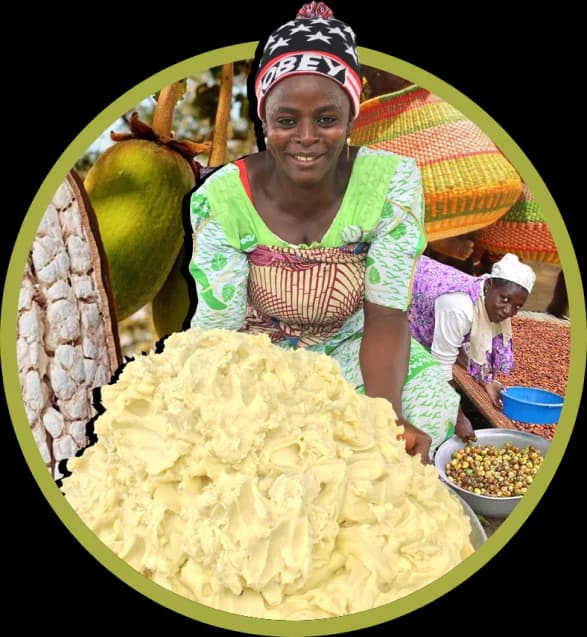
Handcrafted by women in Ghana using age-old techniques passed down through generations. Centuries of practice has taught them how to extract every bit of goodness from the shea nut, and that quality is now passed on in every package of shea butter and all the products made from it.

Shipping & Returns

We ship worldwide from our fulfillment centre in North America. At checkout you can see shipping options and costs. If you would like to arrange your own shipping please select warehouse pickup and send us an email to confirm. We can provide you with shipping and pickup details for your courier of choice. We hope you love your Baraka products. If you are unsatisfied for any reason though, we offer no hassle returns with no time limit, just contact us.

THE KOMBO BUTTER STORY

Learn more about the kombo tree and fruit in this video filmed in one of the forest communities in Ghana. Find out how it is a natural shade tree in cocoa forests and how our work to restore it is helping to support ecosystem biodiversity and increased income for rural women.

BARAKA NUTS 'N BEANS

FROM OUR HANDS TO YOURS

All of our products are sustainably sourced and handcrafted. Each order gives the dignity of income to hardworking women and their families in Ghana.

ALL NATURAL

No chemicals, additives, animal testing, or harsh industrial processing. Just pure, natural oils and butters.

COMMUNITY IMPACT

Every time you purchase Baraka’s products you have a direct impact on the women, families, and communities in northern Ghana. Not only does your order provide the dignity of income to hardworking women but helps support educational and economic projects in the community.
Image

Kombo Nuts (Cosmetic and Sterile) Reviews

Our Customers

Also Love

$3.60
$18
Save 80% ($14.40)
$3.60
$18
Save 80% ($14.40)
$3.80
$18.99
Save 80% ($15.19)
$3.95
$11.99
Save 67% ($8.04)
$3.60
$18
Save 80% ($14.40)
$3.60
$18
Save 80% ($14.40)