How to Overcome Hair Growth Plateau
A hair growth plateau is when your hair keeps growing but breaks off as fast as it grows, so the length stops changing. Baraka sells Community Certified Fair Trade, naturally organic, unrefined shea butter, made by hand at the Konjeihi Women's Enterprise Centre in Wa, Ghana, and this is one of the hair questions we hear most. The way out is to cut breakage first: trim split ends, wear low-tension protective styles, keep your scalp clean, eat enough protein and iron, and condition your hair with shea butter, which is traditionally used on hair in Ghana.
What is a hair growth plateau and how do I overcome it?
A hair growth plateau is the point where the rate your hair grows becomes equal to the rate it breaks. The net effect is zero, so your length does not change. Many people believe a plateau means hair has stopped growing. It has not. Your hair is still growing from the scalp, but the ends are breaking off just as quickly.

There is no single cause. Stress, genetics, hormones, changes in your hair care routine and changes in your diet can all play a part. Coily and tightly curled hair is more fragile along the strand, so it is more likely to break and to feel stuck. You cannot pinpoint the cause for one person without a proper look at their hair, their routine and sometimes a blood test.
This page is DIY advice, not medical advice. Shea butter is not a treatment for hair loss or any scalp condition. If you have patchy loss, a sore or flaking scalp or sudden shedding, see a doctor or dermatologist.
How to overcome a hair growth plateau: the short list
- Trim split ends on a regular schedule.
- Wear protective styles that do not pull on your hairline.
- Keep your scalp clean and massage it gently once a week.
- Eat enough protein, iron and other nutrients, and get blood tests if you are worried.
- Condition with a rich, natural butter such as shea butter to keep the strands soft and less likely to snap.
- Handle wet hair gently and sleep with a satin bonnet or pillowcase.
The sections below explain each step, starting with why length can stall.
Adopt protective hairstyling
Protective styling means wearing your hair in styles that keep the ends tucked away and reduce daily handling. Braids, twists and buns are common examples. They cut down on rubbing against clothes, scarves and the weather, which is one of the main causes of breakage. Hair kept in a protective style also tends to hold moisture for longer, so it feels softer.
Keep the tension low. Styles that pull hard on the hairline can cause breakage and even damage the follicles over time. If your scalp feels sore or you see little bumps, loosen or take the style out. Give your hair a break between styles and never leave braids in for months.

Use natural, high-quality hair products containing shea butter
Your routine decides how much your hair breaks. A gentle shampoo, a good conditioner and a weekly mask help. Expensive products that make big promises do not always deliver, so look at what is in the jar. Many people choose natural products and include shea butter, which naturally contains vitamins A and E and fatty acids. In Ghana, shea butter has been used on hair and skin for generations, and many people report that it leaves hair soft and easier to handle.
If you cannot find a hair product with shea butter in it, you can use Community Certified Fair Trade, naturally organic, unrefined shea butter from Baraka as a deep conditioning mask. The recipe further down shows how.

Why is my hair growing extremely slow, or stopping at a certain length?
Hair on the scalp grows about half an inch (1.3 cm) a month, which is about 6 inches (15 cm) a year. That is an average. Some people grow a little more, some a little less, and growth is usually slower in winter and with age. If your hair seems to stop at your shoulders or at a set length, one or more of these is usually the reason.
- Breakage. Dry ends, rough towel drying, tight elastics, harsh brushing and rubbing on collars all snap hair. This is the plateau described above.
- A short growth phase. Each hair grows for a set time, anywhere from two to seven years, and how long is largely down to genetics. People with a shorter growth phase reach a natural maximum length sooner. Trimming does not change this, but looking after the ends helps you reach your own maximum.
- Stress and illness. Big stress, surgery, fever or a major life change can push more hairs into the resting stage, which shows up a few months later as shedding.
- Hormones. Pregnancy, the months after birth, menopause and thyroid changes all affect hair. If you notice your hair thinning along with other changes, ask your doctor.
- Diet. Hair needs protein, iron and other nutrients. Crash diets and restrictive eating often show up in the hair.
- Styling. Constant tight styles, bleach and chemical straighteners weaken the strand.
The same reasons answer why a hair growth plateau happens for women and for men, and why you might see slow growth on one part of the head, such as the crown, and not another. If you cannot see any cause and the change is sudden, ask a doctor to check your thyroid, iron and vitamin D levels.
In which stage of hair growth does hair fall out?
Hair falls out at the end of the telogen stage, sometimes called the shedding stage. Each hair goes through a cycle with three main stages:
- Anagen (growth). The hair grows from the follicle. This lasts two to seven years and about 85 to 90 percent of your hairs are in it at any time.
- Catagen (transition). Growth stops and the follicle shrinks. This lasts about two weeks.
- Telogen (rest). The hair rests for about three months. A new hair starts to grow underneath and the old one falls out.
Losing 50 to 100 hairs a day is normal. If you are losing far more, your comb is full every day or you can see your scalp more clearly, see a doctor. A hair growth plateau is different from shedding. In a plateau the hairs are breaking along the length, not falling out from the root. Check the fallen hairs: a hair with a small white bulb at one end has shed from the root, while a short broken piece has snapped.
How can I stimulate my hair follicles?
The most reliable steps are simple: look after your scalp, eat well, keep tension off your hairline and be gentle with your hair. Many people also use scalp massage, and they report that it feels good and that their hair seems fuller. Research on massage is small and limited, so treat it as a comfortable habit and not a proven fix.
Shea butter is traditionally used in Ghana to moisturise the scalp and hair. Many people tell us a weekly shea butter scalp massage keeps their scalp from feeling dry. It is a moisturiser. It does not treat hair loss or thinning, and it cannot make thin follicles thick again. Thinning from genetics, hormones or medical conditions needs a doctor or dermatologist, who can offer proper options.
Things that can get in the way of healthy follicles include product build-up, a dry or irritated scalp, very tight styles, heavy stress and low nutrients. Fix what you can and ask a professional about the rest.
Keep your scalp healthy
Your scalp is where your hair grows, so look after it as you would your skin. Use a mild cleansing shampoo once a week to remove product build-up. Massage your scalp with your fingertips, not your nails, for a few minutes once a week. You can do this with a little shea butter or another natural oil if you like how it feels. Rinse well afterwards if it feels heavy.

What vitamin is lacking if my hair is falling out?
No single vitamin explains hair loss, and you cannot tell what is low by looking at your hair. The nutrients most often linked with shedding are:
- Iron. Low iron stores (ferritin) are a common reason for shedding, especially in women.
- Vitamin D. Low levels have been linked with some types of hair loss.
- Zinc. Both too little and too much can affect the hair.
- Biotin and other B vitamins. A true biotin shortage is rare, and extra biotin does not help most people.
- Protein. Hair is made of protein, so low intake shows up in the hair.
Before you buy supplements, ask your doctor for a blood test. Taking too much of some nutrients can cause harm, and a supplement will not fix a problem that is down to something else, such as thyroid disease. A balanced diet with enough protein, leafy greens, beans, fish or eggs and fruit is a good starting point. Supplements help hair only when you are short of something. Good care from the outside and good food from the inside work together.

How often should you trim your hair?
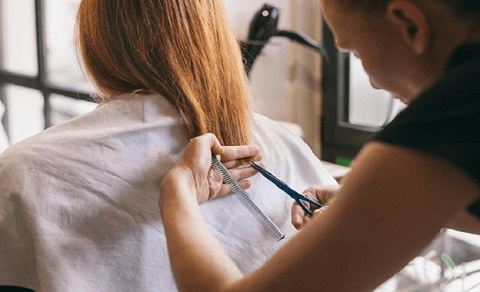
Every six to eight weeks suits many people. If your ends split quickly or your hair is fragile, every four to six weeks is a good habit. If your hair is strong and healthy, you can stretch it to 12 weeks. You do not need to cut much. A small trim, about a quarter of an inch (0.6 cm), removes split ends before the split travels up the strand.
Trimming does not make hair grow faster, because growth happens at the root. What it does is stop splits climbing up the hair, which is how you keep the length you grow. A fresh cut end also looks smoother and tangles less. If you are trying to get past a plateau, regular small trims work better than a rare big cut.
Shea butter hair and scalp mix: how to make one at home
This is a simple leave-in mix for dry ends and for a gentle scalp massage. It has no water, so it needs no special storage, but keep it in a clean jar in a cool place and use clean, dry fingers.
Ingredients
- 2 oz (57 g) shea butter
- 1 tablespoon (15 ml) shea oil, made by hand in Ghana from unrefined shea butter
Method
- Melt the shea butter gently in a heatproof bowl over a pan of hot water, stirring until it is just liquid.
- Take it off the heat and stir in the shea oil.
- Cool in the fridge for 20 to 30 minutes, until it just starts to set around the edges.
- Whip with a fork or small whisk until soft and creamy.
- Spoon into a clean jar.
- Warm a pea-sized amount between your palms and smooth it over the ends of damp hair, or massage a little into your scalp once a week.
Buy the ingredients now
This recipe uses two Baraka ingredients. One click takes both straight to checkout.
- Baraka Raw Shea Butter, 8.8 oz (250 g): enough for four batches
- Baraka Shea Oil, 1.8 oz (50 g): enough for three batches
What each ingredient does in the recipe
- Shea butter makes the mix rich and thick. It contains vitamins A and E and fatty acids, and it is traditionally used in Ghana to soften hair and skin.
- Shea oil makes it softer and lighter, so it spreads easily and absorbs more quickly.
How to change the texture
The rule of thumb is that butters make it rich, oils make it soft and light, and wax makes it hold its shape. For a firmer mix, use a little more shea butter. For a softer, runnier one, add another teaspoon of shea oil. For thick, dry hair use the richer version on the ends only. For fine hair, use less and keep it away from the roots. Small changes make a big difference, so adjust a teaspoon at a time.
Make it your own
These recipes are a starting point, not a rulebook. Use your judgement, be inspired, and don't be afraid to experiment. Everything here is a pure, natural ingredient that blends happily with the others. Start with a small batch, write down what you did, and see how your hair responds. When you find a mix that works for you, make it again.

Conclusion
A hair growth plateau is a breakage problem more than a growth problem. Trim on a regular schedule, wear low-tension protective styles, keep your scalp clean, eat well, check your nutrients with a doctor and keep your ends soft. Be patient: at half an inch (1.3 cm) a month, real length takes months to show. You can read how Baraka works with women in Ghana in our Impact Report.
Items Featured in this Post


Connect With Us!


